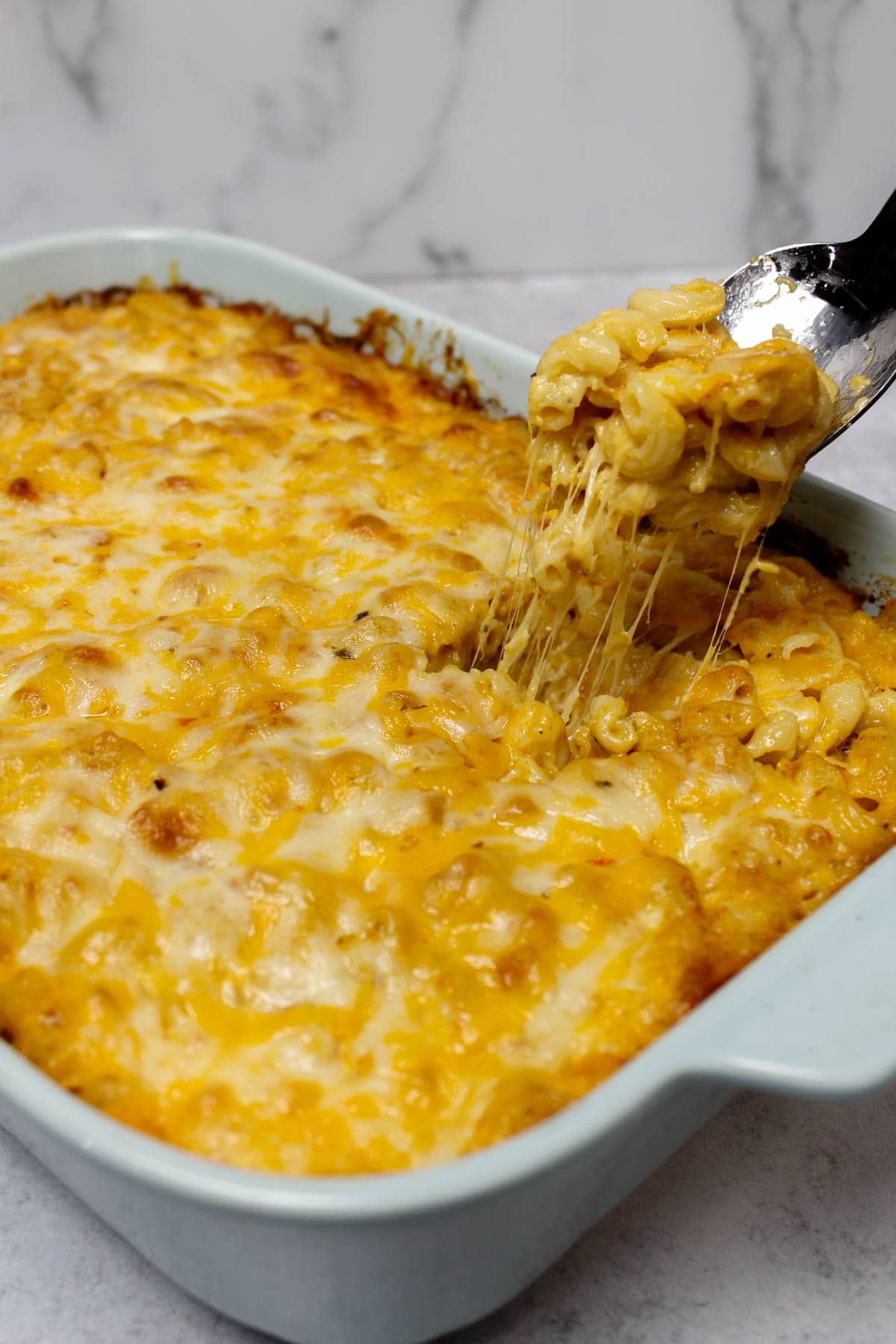
Mac and cheese have always been one of my favorite comfort foods, but working on this project made me realize it has a much deeper history than I ever knew. My research question is: How did mac and cheese evolve from a European pasta dish into an important American comfort food? To answer this, I follow mac and cheese’s journey through time, starting in medieval Italy, spreading to England, coming to the U.S. with Jefferson, growing through African American cooking, becoming famous through Kraft, and eventually turning into the comfort-food trend we know today.
Author Nneka M. Okona, in her article “Why the Black American Origins of Mac and Cheese Are So Hotly Debated,” argues that the history of mac and cheese is far more connected to Black American culinary traditions than the simplified story of Thomas Jefferson bringing the dish from France. Okona explains that although mac and cheese began in 14th-century Italy and later traveled through England and early America, it was enslaved Black chefs especially those trained in European cooking who transformed it into the baked, seasoned version that became central in Southern kitchens. She highlights how figures like James Hemings played a crucial role in shaping the American version of the dish, even though they are often erased from mainstream food history.
Okona also focuses on the cultural meaning of mac and cheese within Black families, describing how recipes are passed down and preserved as part of identity, memory, and community. Her perspective supports the later points in my timeline especially the rise of mac and cheese in African American cooking in the 1800s and its connection to soul food in the 1980s. Overall, her work shows that mac and cheese did not simply “arrive” in America; it was reshaped, claimed, and elevated by Black cooks whose influence remains central to its history.
Anthropologist Franco La Cecla, in his book Pasta and Pizza, argues that foods like pasta and pizza carry deep cultural meaning because they express identity, memory, and the history of a community. He explains that although these dishes began in specific regions of Italy, migration and globalization transformed them into symbols of “Italianness” around the world. For La Cecla, food travels across time and borders, and as it spreads, it is adapted by different groups who change its meaning while still keeping a connection to its origins.
La Cecla’s ideas help support the early parts of my mac-and-cheese timelineespecially the entries about 1300s Italy and the dish’s movement to England in the 1700s. His work shows how a food can start in one culture, move to another, and slowly evolve as people adapt it to their own tastes.
Sources
Okona, Nneka M. “Why the Black American Origins of Mac and Cheese Are So Hotly Debated.” The Guardian, 22 Dec. 2024,
La Cecla, Franco. Pasta and Pizza. Prickly Paradigm Press, 2007.